Stack the Countries®
Dan Russell-PinsonEducation
4.5192.00 Reviews
- Version
- 3.6
- Installs
- 10.00K
- Age Rating
- Everyone
Screenshots
Our Review of Stack the Countries®
 Analysis by Appyee
Have you ever found yourself daydreaming about exploring the vast wonders of our world? Well, your smartphone might just hold the key to satisfying your wanderlust with the app Stack the Countries®. This educational game not only quenches your curiosity about geography but also gives you a chance to test your knowledge in a fun and engaging way. Let’s dive into what makes this app a must-have for both kids and adults alike.
Getting to Know Stack the Countries®
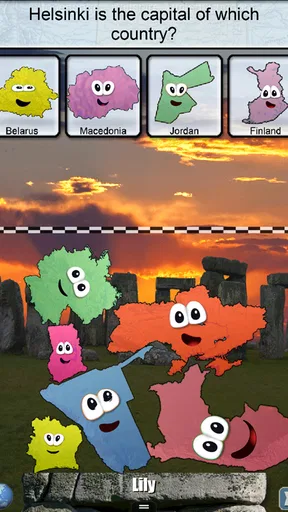
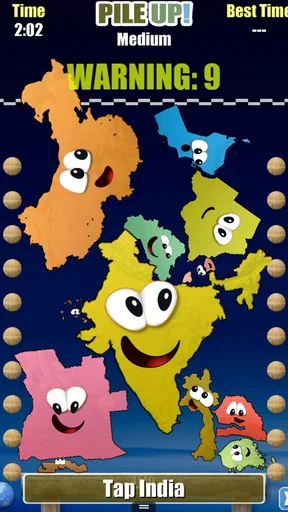
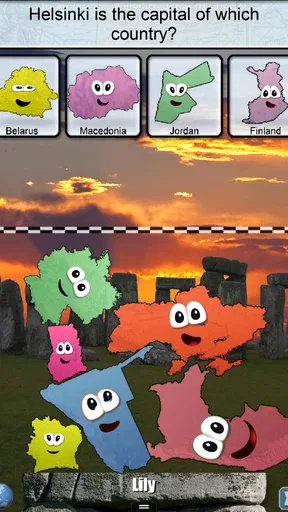
First things first, Stack the Countries® is all about learning geography without feeling like you’re stuck in a classroom. The app cleverly combines learning with gaming, making it a hit among curious minds. The premise is simple: answer geography-related questions correctly to stack a country on your pile. Get a tower of countries to reach the finish line, and you win! Sounds easy, right? Well, it’s more challenging than you might think.
Features That Make It Stand Out
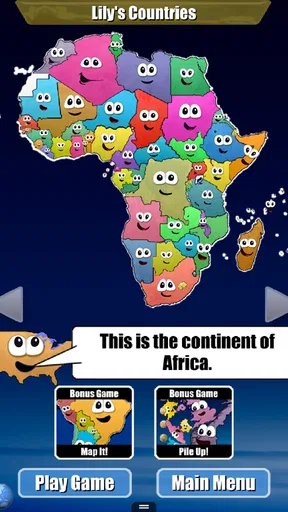
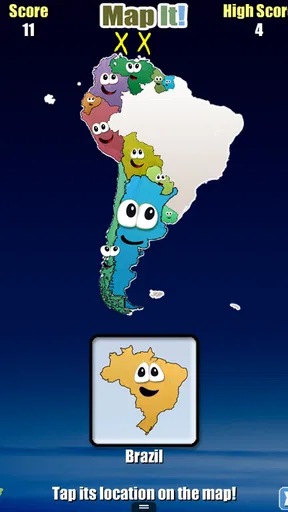
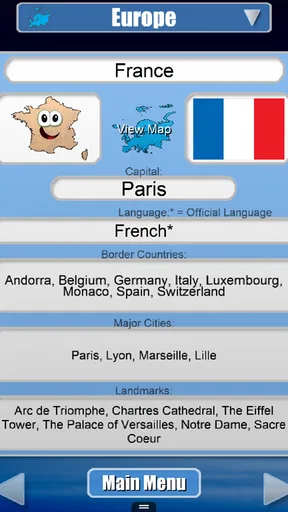
What truly sets this app apart from other educational games is its interactive and colorful interface. The vibrant graphics make learning about countries, capitals, landmarks, and flags a visual treat. Each correct answer helps you earn a new country, which you can then stack strategically to win levels. It’s like playing Tetris but with a global twist.
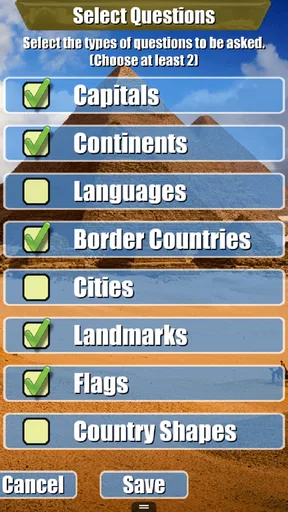
The app also includes a comprehensive flashcard mode, where you can review flags, landmarks, and capitals at your own pace. This feature is perfect for brushing up on your geography knowledge before tackling the levels. Plus, there’s an option to create your own custom quizzes, tailoring the difficulty to your expertise.
Why It’s Perfect for All Ages
Whether you’re a globe-trotting adult or a curious youngster, Stack the Countries® has something for everyone. For kids, it turns learning into a playful experience, with adorable animations and sounds that keep them engaged. For adults, it’s a delightful way to refresh your memory on world geography and even learn something new along the way.
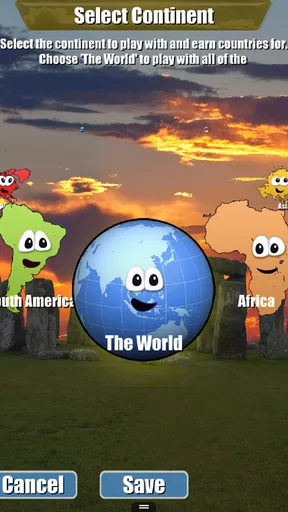
The app includes multiple difficulty levels, ensuring that players of all ages and knowledge backgrounds can find the right challenge. It’s a fantastic tool for parents and teachers alike, making geography lessons more interactive and enjoyable.
How It Keeps You Hooked
One of the most captivating aspects of the game is its progression system. As you advance through the levels, the questions become more challenging, testing the depths of your geographical knowledge. The satisfaction of seeing your tower of countries grow taller with each correct answer is a motivating factor to keep playing.
Moreover, the game rewards your progress with achievements and trophies, giving you that extra push to aim for perfection. Before you know it, you’re not just stacking countries but stacking up hours of educational fun.
A Few Things to Keep in Mind
While Stack the Countries® is generally well-loved, it’s worth noting that the app’s interface might feel a tad overwhelming to very young users initially. However, with a bit of guidance from parents or educators, they’ll quickly get the hang of it.
Additionally, the game might spark a desire in you to explore more about certain countries or regions, which is a fantastic opportunity to dive deeper into geography books or documentaries.
Cost, Compatibility, and Who Should Try It
As a paid education app from developer Dan Russell-Pinson, it costs $2.99. Its age rating is Everyone, and the current version is 3.6, with a minimum operating-system requirement of 5.1. Those details make it easier to decide whether it fits a family device or an older phone, but I’d still check the device’s store page before buying so you know it is compatible with your particular setup.
The app has a 4.5 average from around 727 ratings, with more than 10,000 installs. Those figures suggest that it has found an audience, though popularity alone is not a reason to buy it. I’d think of the price as a choice between a focused geography game and free alternatives: if you expect a child to return to it for short practice sessions, the purchase may make sense; if you only need to look up a capital once in a while, a reference site or atlas is the more practical option.
For a realistic routine, I’d use it as a ten-minute after-school activity rather than trying to turn every session into a lesson. A parent can let a child answer independently, then ask them to explain how they knew a flag or landmark. That small conversation helps distinguish memorizing an answer from understanding it. An adult can use the same approach before a trip: play a short round, note which countries feel unfamiliar, then use a map or book to put them in context.
Building a Useful Practice Habit
The strongest way to get more from the different modes is to give each one a job. Use flashcards for deliberate recall, especially when you want to revisit capitals, flags, or landmarks without the pressure of keeping a tower going. Then switch to the question-and-stacking play when you want to test whether those facts come back under a little time and game pressure. A custom quiz can narrow practice to a topic or difficulty that feels manageable, rather than turning every session into a broad test.
I wouldn’t try to learn every fact in one long sitting. A short repeatable routine is more realistic: review a few cards, play a round, and return to the questions you missed later. If a child is using it, let them choose a small goal—such as recognizing a set of flags—rather than judging the session by how many levels they clear. This keeps the learning objective visible even when the game’s stacking challenge becomes the main attraction.
There is also a useful trade-off in how you approach mistakes. Restarting quickly can keep a session lively, but pausing to say why an answer was wrong can turn a miss into a memory cue. I’d avoid correcting a child before they have a chance to think it through; ask what clue they noticed, then check the answer together. The app is best treated as a prompt for curiosity, not as a complete geography course or a substitute for a map.
How It Compares With Other Ways to Learn Geography
Compared with a quiz-only app, the physical stacking idea gives each correct answer an immediate visual consequence. That makes the activity feel less like a worksheet, although it also means the game’s challenge is not purely about geography: the tower itself adds a balancing element. Someone who wants a calm, straightforward test of facts may prefer flashcards or a conventional quiz. Someone who needs locations, borders, and spatial relationships explained clearly will get more from a globe, wall map, or atlas, since those tools show where countries sit in relation to one another.
Compared with a child’s textbook or a teacher-led lesson, this is easier to pick up for a quick burst of practice and can make repetition feel rewarding. But it cannot replace a structured lesson when a learner needs a connected explanation of continents, regions, or historical context. I see its best role as a lively first pass and a revision companion: play to meet facts, then use a map or reading to make them stick in a larger picture.
It is especially suited to families who want a shared activity without needing to prepare materials, and to adults who enjoy testing what they remember. It is less suitable for a learner who dislikes game pressure, needs accessibility options that have not been established here, or wants detailed explanations after every answer. In those cases, a book, classroom resource, or reference atlas may be a better fit than trying to force this format to do everything.
Limits Worth Knowing Before You Commit
The game’s most distinctive feature is also its main constraint: facts are encountered through a playful challenge, so the experience can encourage quick recognition more than deep geographic understanding. A correct response can feel satisfying without teaching why a country is where it is or how its geography connects to neighboring places. I’d pair it with a map when the aim is more than recall, especially for children who are beginning to learn regions and locations.
Another practical limit is that a young player may focus on the animation and tower rather than the information. That is not necessarily a problem—enjoyment can bring them back—but an adult may need to guide the first sessions and make a habit of discussing answers. Likewise, experienced geography fans may find the basic facts familiar. Custom quizzes and greater difficulty can help keep practice relevant, but anyone looking for advanced cartography or detailed country profiles should choose a dedicated reference tool.
The app is an educational game, not an all-purpose travel guide. I would not rely on a quiz experience to plan a trip, check current travel conditions, or study a country in depth. Use it for playful recall, and turn to a current map or trusted reference when accuracy, context, or practical planning matters. That boundary is useful: it lets the app do what it does well without expecting it to serve needs outside its format.
Wrapping It Up
In conclusion, Stack the Countries® is a delightful blend of education and entertainment, making it a must-have app for anyone eager to expand their geographical horizons. It’s perfect for a quick game session or an extended learning marathon, offering endless opportunities to learn while having fun.
If you’re ready to embark on a virtual journey around the world, head over to the app store and give it a try. Who knows, you might just become the geography whiz you’ve always aspired to be!
Verdict
Strengths of Stack the Countries®
- Interactive learning tool for geography.
- Engages users with fun quizzes.
- Visually appealing graphics.
- User-friendly interface for all ages.
- Includes detailed country information.
Limitations of Stack the Countries®
- Limited updates with new content.
- Some features require in-app purchases.
- May lack depth for advanced learners.
- Occasional crashes on older devices.
- Repetitive questions can occur.
Other Releases by Dan Russell-Pinson
View All
Stack the States®
Education4.7

Stack the States® 2
Educational4.6
Similar Picks in This Category
View All
Duolingo: Language Lessons
Duolingo4.7

Google Classroom
Google LLC2.8

Unacademy: Learn & Crack Exams
Unacademy3.2

Bible App for Kids
Life.Church4.4

Cake - Learn English & Korean
Cake Corp.4.7

Brainly: AI Homework Helper
Brainly4.5
Frequently Asked Questions
What is Stack the Countries® and how does it work?
Stack the Countries® is an educational app designed to make learning geography fun and interactive. It teaches users about countries, capitals, landmarks, and more through engaging quizzes and challenges. Players earn countries as they correctly answer questions and can stack them to reach specific objectives, adding an element of strategy.
Is Stack the Countries® suitable for all ages?
Yes, Stack the Countries® is designed for a broad audience, including children and adults. Its educational content is suitable for anyone looking to enhance their knowledge of world geography. The app's interface is user-friendly for younger audiences, while still offering challenging questions for older users.
Does Stack the Countries® require an internet connection?
No, Stack the Countries® does not require an internet connection to play. This makes it a convenient option for learning on the go, whether you're traveling or simply offline. However, an internet connection may be needed for downloading updates or additional content.
Are there any in-app purchases or ads in Stack the Countries®?
Stack the Countries® is typically a paid app, which means it generally does not contain ads. This allows for uninterrupted gameplay. While the app itself is purchased, users should check if there are any additional in-app purchases for expanded content or features.
What educational benefits does Stack the Countries® provide?
Stack the Countries® offers a variety of educational benefits, including improved geographical knowledge, memorization of capitals, and recognition of country shapes and landmarks. It encourages critical thinking and problem-solving as players strategize to stack countries successfully. This makes it an excellent tool for both classroom and personal education.
